Anna Hughes
The Excessive Body: The Affects of Sensual Encounters in Digital Media towards a Radically Embodied Future
Summary
Being sick has given me a new perspective on cyberspace: I have found computational software and online socialising incredibly enabling but worry this virtual space might occlude the “material” biopolitics affecting vulnerable bodies like mine. My solution is to emphasise cyberspace’s sensual augmentation of the corporeal body. I explore how digital media facilitates the expansion and dispersion of our bodily boundaries beyond our visible matter. Using 3-D rendering software, I embrace embodied sickness and its virtual presence through an emphasis on texture, flows and movement, responding to the rhythmic intensities of being a body. I thereby argue that cyberspace is not a separate space in competition with reality but extra space that works with one’s embodied being. This digital work evidences the enabling/agential potential of technological mobility, and, in turn, points towards the sick body’s potential knowledge around adaptation, ethics and technology beyond neoliberal, disembodied modes of competitive mobility. Ultimately, this work calls for a new, embodied ethics of cyberspace, with in mind its enabling potential.
Additional info
Methods
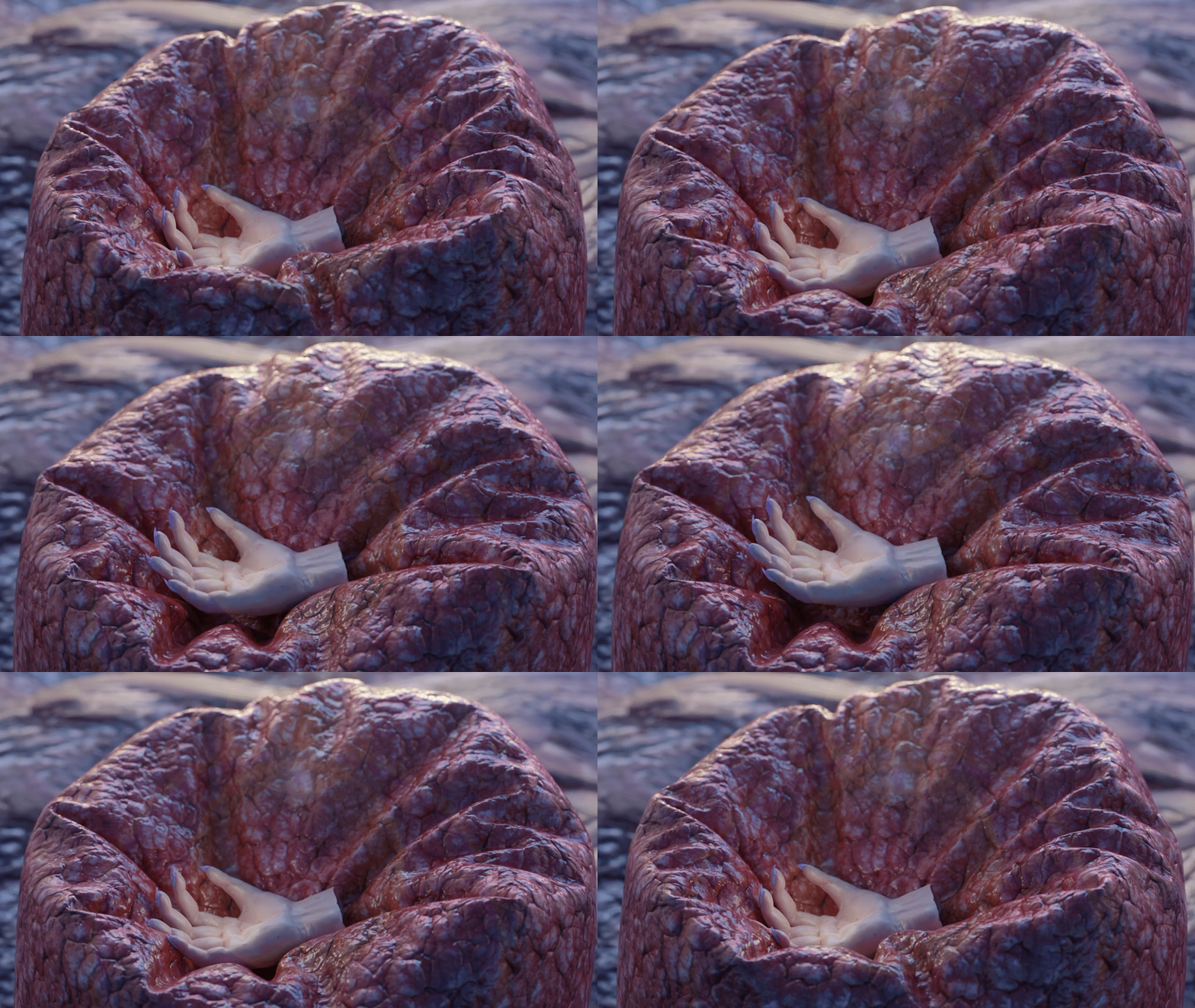
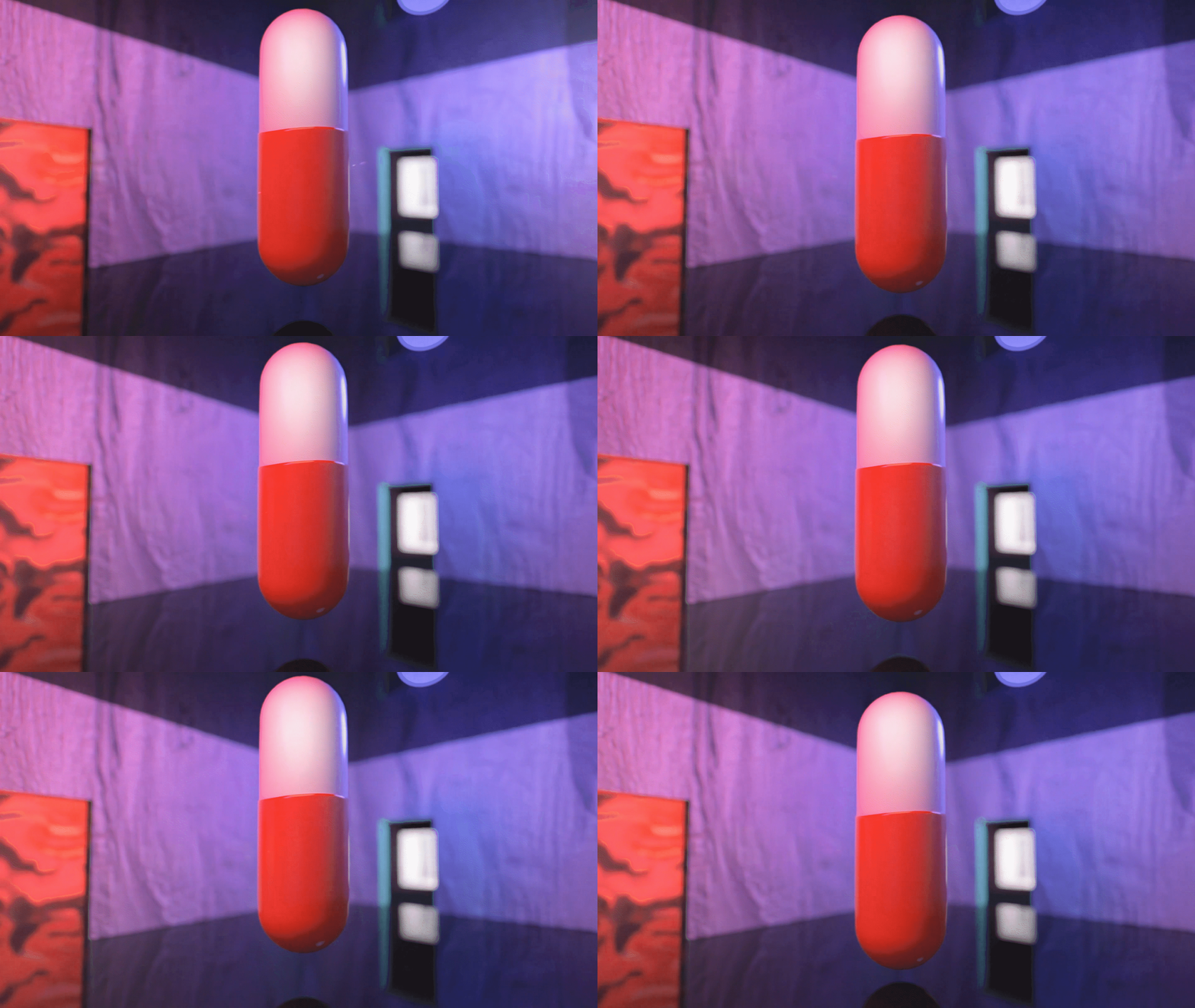
To answer these questions, I use the 3D-imaging software Blender to create digitally rendered animations. These animations feature forms and textures that resonate with the exploration of my own embodiment. Although the work features bold, seductive, and gorey imagery, my body’s main influence on this project moves beyond this ocular indulgence, utilising rhythmic, viscous, textural, and melodic expressions of my fraught embodiment. I bring together new materialism and crip theory to emphasise the “mattering” of being a sick body, promoting the enabling potential of cyberspace beyond capitalist circulation and towards enabling the generative movements of matter. I autotheorize learning to use computational software, and I analyse this shift in practice through the example of making a hyper-realistic rendered hand using computational software. Through this digital hand I question its function as a representational object, arguing that it need not compete with its “original” and can produce meaningful effects beyond its symbolism; a supplementary logic I carry forward to question cyberspace’s relation to the “real world,” and in turn, the disabled body as other to the able. The digital hand simultaneously acts as an aid, giving me the ability to subvert geographical locality and cultivate intimacy from a distance. It allows me to navigate different formats while reaching others at the same time. All this becomes a way to explore mobility and its connection to matter/meaning and the sociopolitics of marginalised bodies.