Rui Qian
Reconstructing Memories with Objects
Summary
This research expands this work by practicing how digital art methodologies can study immigration themes and combine with phenomenology. In terms of practical methods, I have discussed a broader definition of "objects" in the study of everyday items and emotional stories, obtaining insights through the analysis of autobiographical texts. This research not only reveals how immigration shapes memories but also demonstrates how digital art can achieve broad social dissemination, presenting its visibility and invisibility.
Additional info
RUI QIAN, multi-media artist, specialising in digital art and visual communication. Immigration is a theme that she has always focused on and created. During the study at MRes, she has discussed a broader definition of “objects” in the study of everyday items and emotional stories, obtaining insights through the analysis of autobiographical texts. This research studies both personal and collective narratives, highlighting their complementary relationship. Her aim is to explore the emotional experiences of East Asian female immigrants under long-term “non-citizen” status.
Introduction
In “Reconstructing Memories with Objects,” she merges tangible objects with conceptual ones, using these objects as connections between the present and the past. The "objects" in this study are not only physical, tangible items but also abstract things that can evoke memories and associations. It can be a phrase, a song—anything that allows them to associate and connect their current and past emotions. These "connective objects" that I want to study become "punctum" between the past and the future. The past exists as a companion, and now it is the key to unlocking their memories.
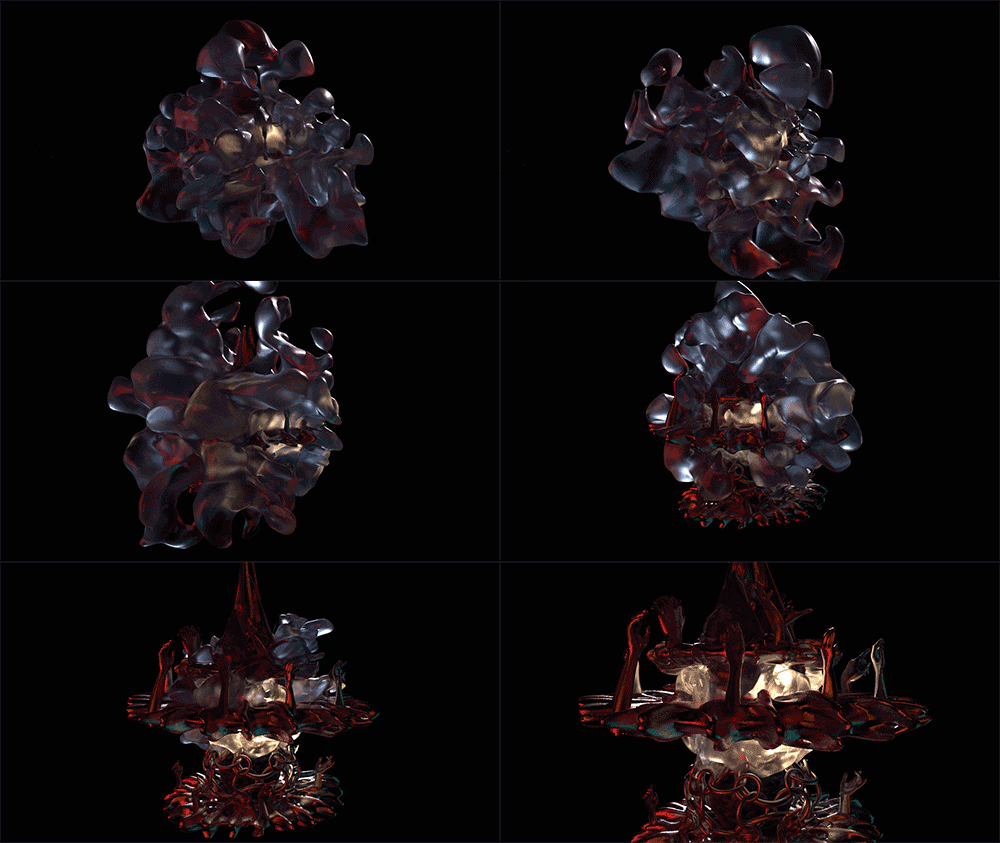
This study reveals how their perceptions and memories shape each other during the immigration experience. Tracing as a methodology offers the possibility to reconstruct the relationship between memory and migration. Reflective writing is combined with digital art to present an interactive practice through experimentation with digital materials. The analysis of their group characteristics is inseparable from the relationship between the personal and collective levels; it is an interactive relationship. Using digital art technology, she construct a virtual “digital sculpture” to metaphorically reveal visibility and invisibility. The digital sculpture ultimately generates dialogue through experimental imagery and reflective writing.
PRACTICE PROCESS