Manon Daure
New Normals for fashion in the metaverse.
Summary
« We buy more clothes per person in the UK than any country in Europe. Around 300,000 tonnes of used clothes are burned or buried in landfills each year »
- Greenpeace fast fashion report 2020-
The primary culprit for these emissions is the “fast fashion” niche wear clothing made from cheap material, usually containing micro-plastics. The rise in cheap, fast fashion has also contributed immensely to the high turnover of clothes each year. We are now buying more, cheapest and use less our clothes as in the past. At the same time, the fashion industry is entering a new form of production through virtual clothes and the metaverse. This research is questioning shopper behaviours and what can be the new normals in the future.
By taking the stand of self-actualisation ( which is this urge to consume created by our society that is designed to encourage people to buy and discard in a concise time.) It analyzes and redesigns the relationship between consumers and producers under behaviour change models. This research was conducted by practice in order to understand how the fashion world can benefit from the metaverse as a new driver for sustainability.
Through the journey of this research, we dive inside the context and challenges linked to these two worlds. We explore the beauty of used clothes discovering a new model for sustainability threading fashion into the metaverse.
The goal is here to invert this vicious circle and develop a more sustainable business model endorsed and supported by stakeholders and show that this new world can give an entirely new meaning to the fashion industry.
THE NEW NORMALS PROJECT
How can we thread the fashion industry into the metaverse to create a more sustainable ecosystem?

MOTIVATION
"I think a lot about clothes. It’s not just clothing actually but the way people chose clothes, match them, their body, and their mindset. Maybe that makes me a materialistic person? But that doesn’t stop me to see fashion as entertainment. Do you know what else I think about a lot? The climate emergency. But the thing is, despite how scary and heart-breaking the climate emergency is, I think about clothes just as much. As a designer, my actions are supposed to align with my values no? But those two tendencies, my preoccupation with fashion and my fears for the future, feel like they live in separate parts of my head, but they are connected. So why despite how critical the situation is, we can’t stop shopping? The pleasure of fashion exploration, guiltiness of consumption. The interplay of pleasure and guilt was my motivation to investigate our behaviours and what the future can be."


VIRTUAL PLATFORM
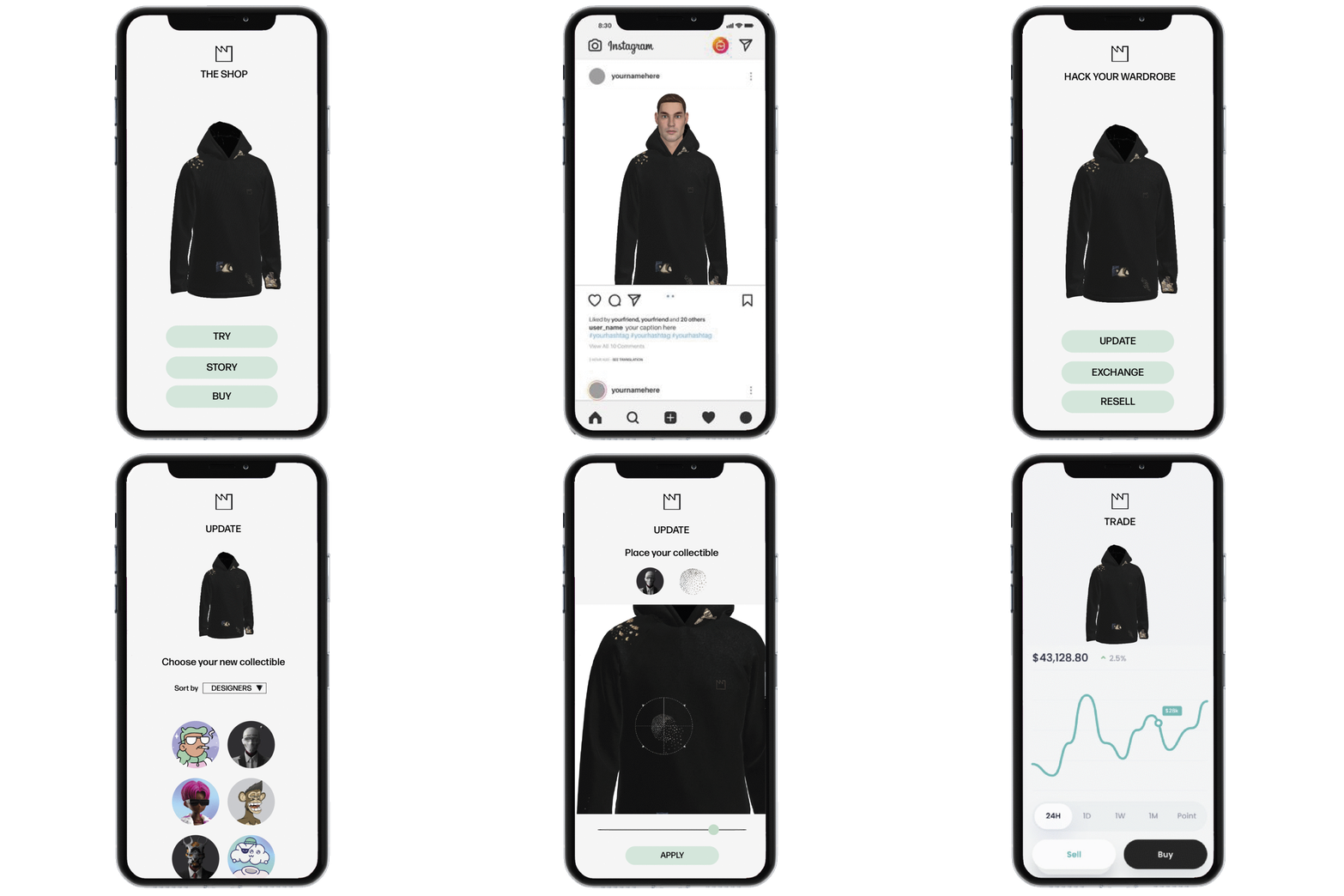
The model set up engagement platforms to provide a space for ongoing interactions between creators and their customers, where the two parties meet to co-create unique experiences, and the customer is invited to join the creative process. The Logo embroidery on the piece of clothing host the digital twin, a replica of the garment in the metaverse world, sharing real-time data on the products. Working as an NFT all actions are written on the profile of the product enabling the user to manage the value of his piece of clothing. Seeing in real-time the impact of your activity on the value of your clothes drives more conscious and sustainable behaviour for the user. This enhances the wearer’s level of understanding of the impact of a garment.
He is now responsible for the value of his clothes, by caring for, repairing, updating…
This is inspired by the resale sneakers market that grow fast over the past few years and where people enjoy managing rare sneakers items by selling, reselling and participating in raffles.


INFINITY, a symbol of conversation.
Conversations are exchanges between two systems where existing knowledge is transferred or new knowledge is created.
THE HOOK MODEL
The next ecosystem is constructed as a hook model. The Hook Model is a way of describing a user’s interactions with a product as they pass through four phases: a trigger to begin using the product, an action to satisfy the trigger, a variable reward for the action, and some type of investment that, ultimately, makes the product more valuable to the user. As the user goes through these phases, he builds habits in the process.
It manufactures desire by guiding users through a series of experiences designed to create habits. I call these experiences “Hooks,” and the more often users run through them, the more likely they are to self-trigger.
OUTPUT : The project of an ecosystem “NEW.NORMALS"
What New Normals does is, it gives you a white canvas and a complete service to act and evolve with your clothes. The Lego bricks that you have to put together are nothing less than designer pieces, not finished clothes, but pieces and a way of repairing them. Some of the greatest savoir-faire from the greatest artists.
From a consumer perspective, that’s very powerful. You can have a way into something that you love. I think fashion is something we all love in our day-to-day lives, in terms of the culture or our experience. Creating a close connection between artists and users on an interaction level is the first step toward creating a fashion industry that works better for everyone. You have more power than you think through making art, when your art becomes something that is a customizable plaything to a user, almost like in-game content in video games. The current model of fashion is such a raw deal for both artists and consumers. By constructing this new ecosystem for clothing the user is really able to support his favourite creators. And the creators will be linked forever to their creations on each item earning on each transaction. Being able to really share the stories he wants to share in his creations. An ecosystem enabling them to create and meet their community more easily and trustfully.


Our collective future depends on us understanding our interconnectedness. To achieve that we need to bring the invisible into view and explore the world beyond the human tangibility. Merging technology with physical couture, as well as digital-ready-to-wear. New normals create a promise of a sustainable self-actualisation, where fashion stands for innovation, sustainability and immersive design. Redefining customers' shopping behaviors, reimagining design, and reevaluating clothing production. A new vision for clothes consumption: combining infinite creative possibilities and ways of dressing up in the virtual world with the slow pleasure of craftsmanship and highly unique pieces creating through time.
CARE FOR HISTORY. CARE FOR THE PRESENT. CARE FOR THE FUTURE. CARE FOR EMOTIONS. CARE FOR MEANINGS. CARE FOR WASTE. CARE FOR CONSEQUENCES.
.CARE FOR YOUR CLOTHES.
© Project, Manon Daure http://newnormals.design
© Pictures, Cesare Riccardi https://www.cesarericcardi.com

RESEARCH AND DEVELOPMENT
It’s time to think about a new model for the fashion industry, a sustainable one. I believe that the construction of the virtual world “ metaverse” can facilitate the transition to a new ecosystem. I don’t consider ‘virtuality’ as a way to detach from reality, but as a different means to explore human experience and facilitate the development of sustainable behaviours.
Structure of the research


Context
The linear model of fashion from nature to production, consumption and disposal is challenged by a planet where natural resources are being exploited, where millions of pieces of clothing and shoes are being bought every minute, and where tonnes of disposable clothes are dumped in landfills, giving rise to a fashion which is highlighted in reports as “Dirty fashion“. The « system» need to change radically and permanently.
Fashion entering slowly the web 3.0 metaverse world creates a perfect opportunity to rethink a new fashion ecosystem. We can already see the interest of the biggest fashion leaders in this new path because they face one of their biggest challenges: maintaining relevance in a rapidly changing industry by consistently engaging with consumers in new and innovative ways. But this fast new way of exploring fashion through our digital identity is for the moment just a new way of consuming fashion in a new form and is not really impacting ( reducing )our physical production/ consumption.


- Need for self-actualisation and experience
Self-actualization, in psychology, is a concept regarding the process by which an individual reaches his or her full potential. which drive us to realize our true potential and achieve our ‘ideal self. ( interaction design foundation) Self-actualization needs are also referred to as our ‘being’ needs; these include personal and creative selfgrowth.
- Need for blurring boundaries between our real and digital identity
From the ethnography we now that there is a demand for a seamless transition between all our identities, digital one and fashion real identities...
- Need for transparency, traceability and trust
From the Instagram survey, fashion consumers are clearly asking for transparency and easier access to information, maybe in a more playful way and not with a scratchy tag.
- Need for unique and meaningful clothes
Demand for meanings and storytelling behind clothes, as well for the user for emotional durability than for the creators to be able to be understood.
- Need for care, extended life and end-of-life solutions
A lack of care from the consumers is driving the majority of fashion waste. To care means to take responsibility for the cause and effect of our own actions, recognizing the interconnectedness of the world and the human agency in it. We need to recreate this interaction of care through the new system.
Methodology


Model development
To blur the boundary between these two worlds new normals creates a phygital space, the metaphysical space ( Meta comes from the Greek prefix and preposition meta, which means “after” or “beyond.” When combined with words in English, meta- often signifies “change” or “alteration” as in the words metamorphic or metabolic.), a phygital solution making the link between a real item and its digital twin by using the



